
Explore The Virunga Massif in East Africa
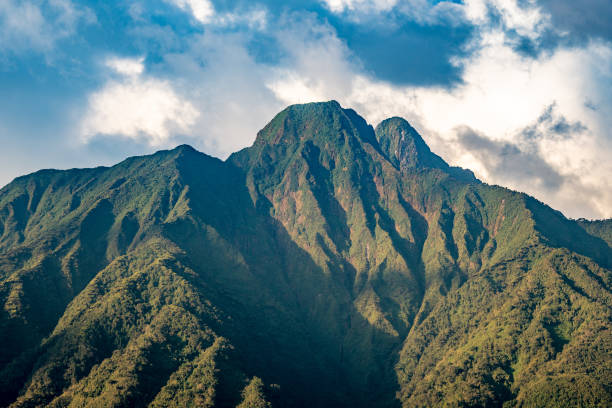
Explore The Virunga Massif in East Africa: The Virunga Massif is one of Africa’s most extraordinary natural landscapes, a chain of towering volcanoes straddling the borders of Rwanda, Uganda, and the Democratic Republic of the Congo. Rising dramatically from the Albertine Rift Valley, this mountainous region is globally celebrated for its breathtaking scenery, exceptional biodiversity, and its role as a sanctuary for the endangered mountain gorilla.
Volcanoes/Mountains in the Virunga Massif
The massif consists of eight major volcanoes: Mount Karisimbi, Mount Mikeno, Mount Bisoke, Mount Sabyinyo, Mount Gahinga, Mount Muhabura, Mount Nyiragongo, and Mount Nyamuragira. These volcanoes vary in character, some dormant and forest-covered, others stark and active, with lava flows reshaping the terrain. Mount Karisimbi, the tallest at 4,507 meters, is often capped with mist and occasionally frost, creating a dramatic alpine environment unusual for equatorial Africa.
Geologically, the Virunga Massif is part of the larger East African Rift system, where tectonic forces slowly pull the African continent apart. This rifting activity fuels the volcanic processes that formed the mountains. Mount Nyiragongo, in particular, is known for its persistent lava lake- one of the few in the world- whose glowing surface has fascinated scientists and adventurers alike. Periodic eruptions have significantly impacted nearby communities, especially in the Congolese city of Goma.
Beyond its volcanic spectacle, the Virunga Massif is most renowned as the primary habitat of the endangered mountain gorilla. These great apes inhabit the dense montane and bamboo forests that cloak the slopes between roughly 2,200 and 4,000 meters. Conservation efforts across the three countries have helped stabilize and gradually increase gorilla populations over the past few decades. Carefully regulated gorilla trekking tourism now provides crucial funding for conservation and local livelihoods, while also fostering international awareness of the species’ plight.
National Parks found within the Virunga Massif
The Virunga Massif’s protected areas include Volcanoes National Park in Rwanda, Mgahinga Gorilla National Park in Uganda, and Virunga National Park in the Democratic Republic of Congo. Together, these parks form a transboundary conservation landscape. Virunga National Park, established in 1925, is Africa’s oldest national park and a UNESCO World Heritage Site. It encompasses not only volcanic highlands but also savannas, wetlands, and parts of Lake Edward, making it one of the most ecologically diverse protected areas on the continent.
Biodiversity in the Virunga Massif extends far beyond gorillas. The region shelters golden monkeys, forest elephants, buffalo, and a remarkable array of birdlife, including many Albertine Rift endemics. Vegetation zones shift with altitude, from lush montane forests to bamboo stands and Afro-alpine moorlands dotted with giant lobelias and groundsels. These ecosystems are shaped by both elevation and volcanic soils, which are rich in minerals and support dense plant growth.
The cultural history of the region is equally rich. Local communities have long lived alongside the mountains, drawing spiritual meaning from their imposing presence. Traditional agriculture flourishes in the fertile volcanic soils surrounding the protected area, though population pressure has led to challenges in balancing human needs with conservation goals. In recent decades, political instability, particularly in eastern Democratic Republic of the Congo, has complicated conservation work. Park rangers in Virunga National Park have faced significant risks protecting wildlife from poaching and armed groups.
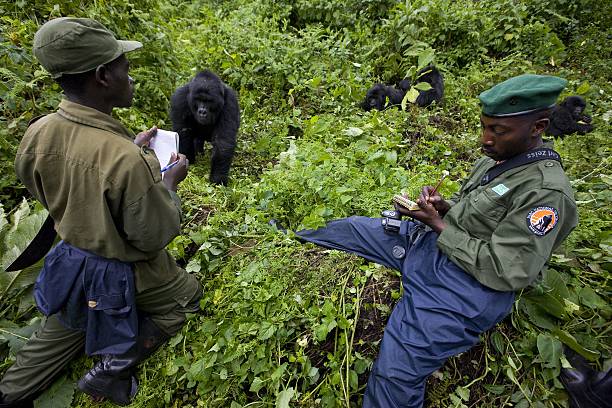
Tourism has become a central pillar of the massif’s modern identity. Gorilla trekking permits, guided volcano hikes, and visits to crater lakes attract visitors from around the globe. In Rwanda, the slopes of Mount Bisoke and Mount Karisimbi offer challenging hikes with spectacular views. In Uganda, Mount Sabyinyo’s jagged ridges allow hikers with spectacular views. In Uganda, Mount Sabyinyo’s jagged ridges allow hikers to stand at the intersection of three countries. In the Democratic Republic of Congo, adventurous travelers climb Mount Nyiragongo to peer into its fiery crater. These experiences generate revenue that support conservation initiatives and community development projects, creating a model in which environment protection and economic growth can coexist.
Climate change poses emerging threats to the Virunga Massif. Shifting rainfall patterns and rising temperatures may alter vegetation zones and affect gorilla habitats. Increased human encroachment and demand for land further strain the delicate balance between people and nature. Continued international cooperation, funding, and community engagement will be essential to safeguard the massif’s future.
Ultimately, the Virunga Massif stands as a symbol of resilience- both ecological and human. Its volcanic peaks, mist-covered forests, and iconic wildlife represent one of the last strongholds of truly wild Africa. Despite challenges ranging from geological hazards to political conflict, the massif endures as a place of global significance, where conservation success stories offer hope in an era of environmental uncertainty.

